Ecommerce Automation: The Key to Scalable Online Business Growth
What Is Ecommerce Automation?
When a business is at its developmental stages, the work process is usually handled manually. However, business growth always accompanies an increased complexity in operations. Simultaneously, there is a spike in the workload as well.
In such cases, companies often resort to an automated business process.
An eCommerce automation involves using software tools. These tools perform intricate and repetitive tasks on your behalf.
By automating business processes, there is a significant cost reduction. Additionally, there is a growth of sales and eradication of mistakes caused by human error.
Various examples include:
- Automated response to customer queries.
- Inventory management.
- Customer segmentation based on search/buy history, demographics, etc.
- Auto-publish sales campaigns across platforms.
How to Use Automation for Your eCommerce Website?
If you are aiming for improved performance of your online business, there are several software tools that you can use. But first, let us find out the many different ways you can use automation for your eCommerce website.
Following are some of the ways of utilizing eCommerce automation for your website:
1. Use Automation to Tag and Segment Your Customers
The process of customer segmentation is a popular marketing tactic. There is a need to be thorough, precise, and accurate when segmenting customers.
The customers are usually divided based on their demographics, buying behavior, and other social data.
A person's gender or age, and profession also play a deciding role in their buying habits. Assessing their buying behavior can throw some light into which product they prefer as well.
For example, say you are a B2C company selling different kinds of products, such as cosmetics, accessories, and so on.
If you can zero in on the product preference of your customer, you can segment them accordingly. That way, it will be easier to send them relevant suggestions the next time they shop.
Keeping track of the lead's social media activity and interests also helps to decide their preferences. Manually inputting the data is time-consuming and has plenty of room for human error. Hence, using software tools is a better choice.
2. Use Chatbots and Similar Software Tools to Welcome New Customers
Business personnel cannot reach out to a customer instantaneously in case they have any queries. The better option is to install a chatbot, which comes with ready-made answers to frequently asked questions (FAQs).
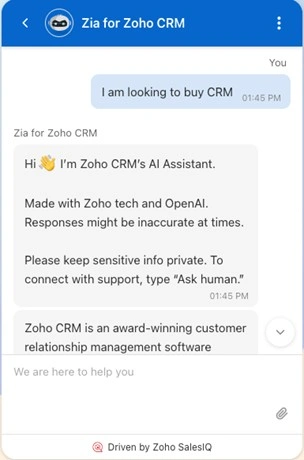
Artificial intelligence (AI) powered chatbots asses and learn from customers. Hence, providing them with a detailed and personalized explanation.
How does a chatbot help your eCommerce website?
For starters, they vastly improve customer service. The chatbots in various eCommerce sites help customers by guiding them through the payment process.
As stated, it also caters to the sense of immediacy and is available round the clock. If needed, it can also connect the customer with support personnel to solve their issues.
A chatbot can help customer support executives attend high-priority calls urgently. These simple tools help build a bond with the company, thus increasing brand loyalty and trust. Higher customer satisfaction also leads to the generation of more leads.
3. Make Provisions for the Customers to Leave Reviews Under the Products
It is mandatory to find out how satisfied a customer is with your product. For any business to thrive, one needs to take into account how the customer perceives their products. Or whether there are any amendments to make.
A company that is attentive to the needs of the customer has higher credibility.
You also have to make sure to monitor the negative feedback, if there is any. You can make use of automation to know the reason behind the feedback instantly. In the feedback section, the customer may specify their reason.
You can reach out to them later to listen to their issue.
Consecutively, after a customer has made a purchase, you can send them automated emails. The email questionnaire can help gather the customer's opinion. It is not limited to just the product but also delivery services.
4. Use Tools to Provide Product Suggestions Based on Their Purchase History
To make a person spend more time on the website, make sure they come across products that suit them. Based on their browsing history or their buying habits, use tools to auto-suggest products.
There is also a different method.
The automation tools will suggest the fastest selling products automatically when someone clicks on the search box. Another feature is the addition of autocomplete option in the search bar of your website.
Most users use their mobile phone app to make purchases. To type in long sentences is a hassle. In this situation, the autocomplete tool comes in handy.
All top-grossing eCommerce sites provide the autocomplete option to their customers. You can showcase all the relevant products related to a keyword to the customer.
5. Use Online Tools to Retarget Potential Leads
In plain language, retargeting involves bringing back customers who have lost interest. There are cases where the customer may have visited your website and left without making any purchases.
With retargeting, you can continue to showcase your products when they visit any other site.
Re-targeting is effective, and many eCommerce world leaders use this method. Big commercial sites like Flipkart and Amazon often use this technique to bring back customers.
According to Science Direct, 70% of retargeted customers are likely to turn into leads. It helps increase the point of contact between your customers and your product. The most popular sites for advertising to your prospective customers are Facebook and Google.
Additionally, you can keep them updated about your product discounts or drop in prices. It is an effective measure to capture customer attention and lead them back to the website.
6. Manage Your Inventory Using Automation
What does automate inventory management imply?
It involves the use of software tools to ensure smoother management of the supply chain. In short, you are free from manually keeping the score of products in the inventory.
Also, you do not need to place orders for shipping or keep track of the goods sold. And, it also helps the customer see real-time inventory information.
For example, it helps mark all out-of-stock products and removes them. It also updates the number of products that are in stock.
In case there are limited products available, then it notifies the customer as well. Customers may have the option to add products to their wish lists. In some cases, it can even re-order popular items on its own.
Machine operation guarantees accurate data, and it is also less time-consuming.
7. Use Tools to Keep Track of Returning Customers and Provide Them with Special Discounts
As it is with any business, it is always more profitable to retain customers. Recruiting new leads every time is not only time-consuming but also expensive.
Working towards retaining a mere 5% of your customers helps increase company profit from 25-95%. The key is to build a strong rapport with your customers.
If you want to increase customer satisfaction, it is necessary to reward them from time to time.
It is manually impossible to keep track of customers who make a lot of purchases. However, with various software tools available, you can keep track of individual spending.
Based on the amount of money spent, you can automatically send the customers emails with discount coupons. You can even add gift vouchers worth a certain amount which the customer can avail of during check out.
8. You Can Track When Customers Abandon Carts Midway
With automation, you can easily find out when a customer leaves without completing a purchase. You can even keep track at what stage of the purchase the customer decided to cancel buying the product.
As soon as you find a customer opting out, you can send them an abandoned cart email. Or you might even send them notifications in the form of pop-ups.
The trick is to send them within the first hour to find out what went wrong. You can use a web tracking system. It helps to find out the analytics regarding at which stage the customer is leaving the website. It is a common feature in mobile phone applications.
Using eCommerce software is an easy way to send a follow-up email, and you do not have to do anything manually.
9. You Can Even Detect Fraudulent Orders Utilizing Automation
Fraudulence is a real issue, and your website needs ample provisions to protect your customers.
It is also necessary to distinguish between bulk orders from real customers and fake orders. But it is humanly impossible to keep track of which orders are legitimate and which are not. Hence, automation comes into play here.
Automation tools can screen and review your transactions. Also, it will automatically verify whether or not your customer is legitimate. It does so by providing insights into customer behavior.
Software tools keep a record of IP addresses of devices and also home addresses. It can even identify whether there was an issue in the past with a specific IP.
In this way, you can distinguish a genuine buyer from a fake one. You can also get real-time tracking and reporting of suspicious activities taking place on your website.
10. Lastly, You Can Use Automation to Nurture Your Leads
Turning a lead into a customer is a long-drawn process. However, employing automation makes it a lot easier. As compared to manual handling, automation is quicker and reaches a person on time.
Not only that, it can change the response according to the customer feedback. It identifies at which stage of the buying process the customer is and sends personalized emails.
Automation tools also help maintain a connection with your customers. Whenever a new visitor comes to the website, a pop-up can easily collect data like email addresses. Once the data collection is over, only then customer profiling takes place.
All communication takes place through a person's email, so this is crucial.
Nurturing is mainly cultivating an organic interest among the customers. Through seeking feedback and contact, it shows that the company values customer opinion.
Best Ecommerce Automation Tools in the Web
Now we know how we can apply automation tools to eCommerce websites. So, here are a set of software tools that help carry out the operations mentioned above on your website.
1. Mailchimp
You can use Mailchimp as your email marketing automation tool. It is a popular tool for email marketing because of its high affordability. The service is free of cost for the first two thousand subscribers on your email list.
The website is easily navigable and comes with a lot of options for personalization. You can generate your email list and choose a layout for sign-up forms.
After that, you can add it as a plug-in to your website. Not only that, but it also allows you to choose an email template for your replies. You can choose from the options available or build from scratch.
This software tool also provides paid plans in three categories. The most expensive of the three comes with a lot of advanced features.
You have comparative reporting, unlimited seats, role-based access, and phone support.
2. ActiveCampaign
It is one of the best software tools for mail segmentation. This software tool provides you various ways in which you can segment your customer list, such as:
1. Average order value
2. The number of orders placed
3. Cart abandonment rate
4. The total value of the order purchased, and
5. Time since last purchase
Apart from the above list, there are additional features available on ActiveCampaign.
They provide targeted advertisements, in which you can post personalized Facebook ads. It also has automated email services to send offer notifications.
3. ChatBot
You can use the ChatBot service for interactions with your customers. The ChatBot software maintains customer support round the clock. It also allows you to engage with your customers across multiple channels.
The ChatBot allows you to personalize your customer response as well. There are pre-built response templates that you can choose from.
If you prefer to build your own from scratch, you can do that as well. The software automatically collects user data while conversing. This data helps build buyer profiles later.
4. Pipedrive
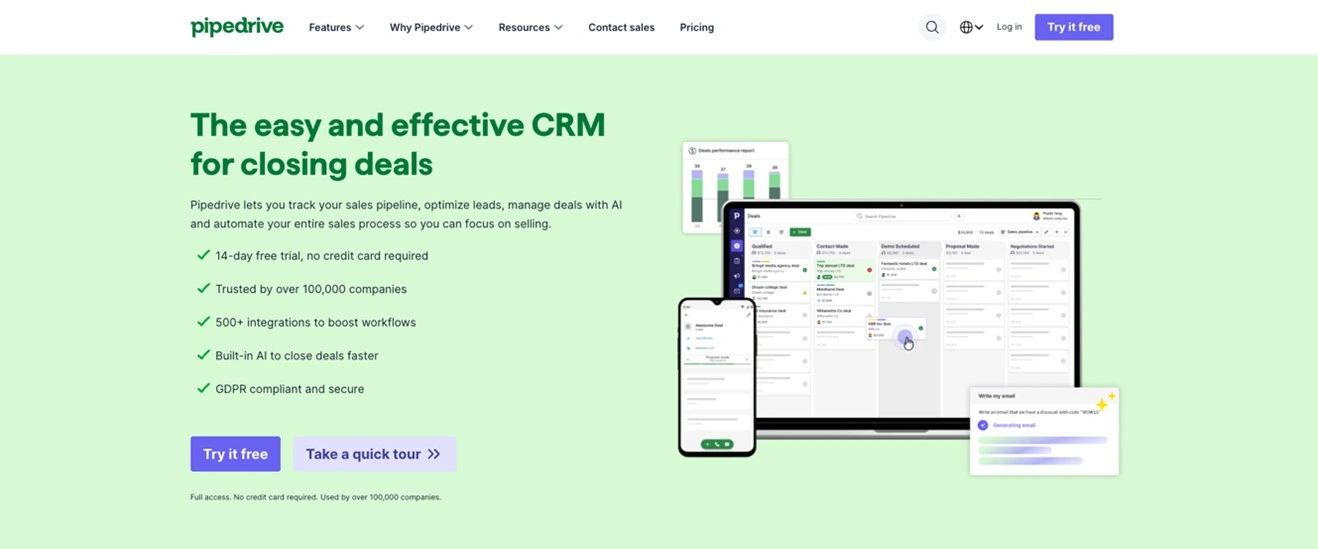
This software aids in visualizing your entire sales process funnel. And it also has an easy-to-use interface and is a popular CRM tool.
Some of the features of this tool are:
a. It has customizable email templates.
b. It allows custom columns and filters.
c. It shows the revenue projection.
d. It comes with a scheduler to keep track of demos.
e. It helps track the communication that you had with a specific customer by providing the whole contact history.
5. HubSpot CRM tool
It is another popular CRM tool to manage your sales. The pricing is $36 a month. Some of the popular features of this tool include Email tracking, meeting scheduling, and Live Chat.
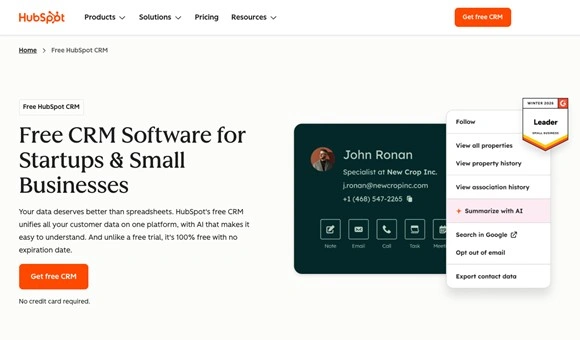
It also regularly provides company insights. This way, you can track your performance and get to know how effective a particular strategy is.
This software tool also offers an array of free features. Some of such free features are document sharing, sales quotes, and engagement notifications.
6. QuickBooks
It is better suited for small to mid-level businesses and is chiefly an online accounting software.
It helps you keep track of your expenses, generate reports, as well as create invoices. This app is compatible with computers, laptops, and smartphones.
7. Marketo
This tool by Adobe helps with lead nurturing. It can also create meaningful conversations with customers.
This tool is multi-faceted and comes with several different features. It helps manage customer accounts and also convert prospective leads into customers.
You can also use Marketo for email marketing. It assesses the customers’ online behavior and sends customized emails.
There are features such as website personalization, and it also tracks website activity. For instance, it keeps track of the average time a person spends on the website.
The pricing is flexible and depends on the size of the database.
8. Jumplead
This automation tool is another lead generation software. Jumplead allows you to create a landing page. It also helps in capturing leads and nurturing them through CRM tools.
Additional features include email campaigns and a live chat option.
There is a free plan available in case you want to test it out. The paid plans are four-tiered.
9. Mixpanel
This software is an analytics tool just like the very popular Google Analytics. Even if you use Google Analytics, Mixpanel is a must-have for any eCommerce store.
You can engage with visitors and work to retain them. It allows data segmentation and also helps with monitoring customer behavior.
Features include unlimited data history and unlimited saved reports and cohorts.
Pricing is again affordable, with a free plan available. Customization is available depending on your need.
Ecommerce Automation FAQs:
Q1. What Are the Best eCommerce Automation Tools?
- For marketing & SEO: The HubSpot marketing hub
- For accounting: Sage business cloud account
- For internal communication: Slack
- For external communication: MailChimp
- For analytics: Google Analytics
Q2. How Can I Automate My eCommerce Business?
There are multiple ways to make your business transactions easier. You can automate many of the business processes instead of using manual labor.
You can automate emails, customer support, detect fraudulent orders, track customer activity.
You can also use CRM tools to manage the whole process, as they usually have multiple features.
Q3. How Is Automation Important for Your eCommerce Business?
Automation is pivotal as and when your business expands. Automating the process ensures precision, reduces the scope of human error.
It is quick, and you do not have to spend much time or labor on it. It makes the entire selling process efficient and less time-consuming.
Q4. Why Is Automated eCommerce the Future of the Industry?
Online shopping is now in demand, with bulks of orders placed every day. There are several advantages of automation that are hard to ignore in this age and era of online shopping.
Automation tools are available for every aspect of marketing, be it sales, analytics, or operations. Automation provides precision and timing, which is not possible for humans. There is always a scope of error in manual labor.
Machines not only aid the customer in shopping, but they also can detect fraudulent orders. Thus, automation tools save the business from suffering losses.
Q5. How Do I Run a Successful Campaign for eCommerce with the Help of Automation Tools?
The key to running a successful campaign is first to identify your niche. Secondly, prepare a buyer persona for your target audience. And lastly, know your customer's buying habits and also their average spending.
The other steps include:
-Creating an automated email marketing campaign. Let your customers know about the different offers.
-Advertising on multiple social media channels.
-Monitoring their interests and showing them relevant ads.
-Simplifying the check-out process.
Q6. What Are the Processes That We Can Solve with Automation in eCommerce Right Now?
So, here is how automating eCommerce processes ensure better dealings.
Firstly, it helps with the customer experience and aids with customer support. It helps track repeat buyers and rewards them with discounts and offers. In this way, the buyer stays interested and loyal to your brand.
Secondly, it makes data entry easier. You no longer need to do it manually. Software tools can track product sales rates. It can even place orders in case a product runs out.
What Are the Best Marketing Automation Tools for eCommerce?
MailChimp is one of the best. It has a lot of features and comes at an affordable rate. You can choose any of the three plans, and it also has a free service for beginners. It gives you the option to choose the layout and even design your own.
HubSpot is another excellent option. They have many different automation tools serving a variety of eCommerce needs.
The best thing about using HubSpot is that most of these tools are compatible and work together seamlessly. And, some of these tools are free, while others come with a very nominal price tag.